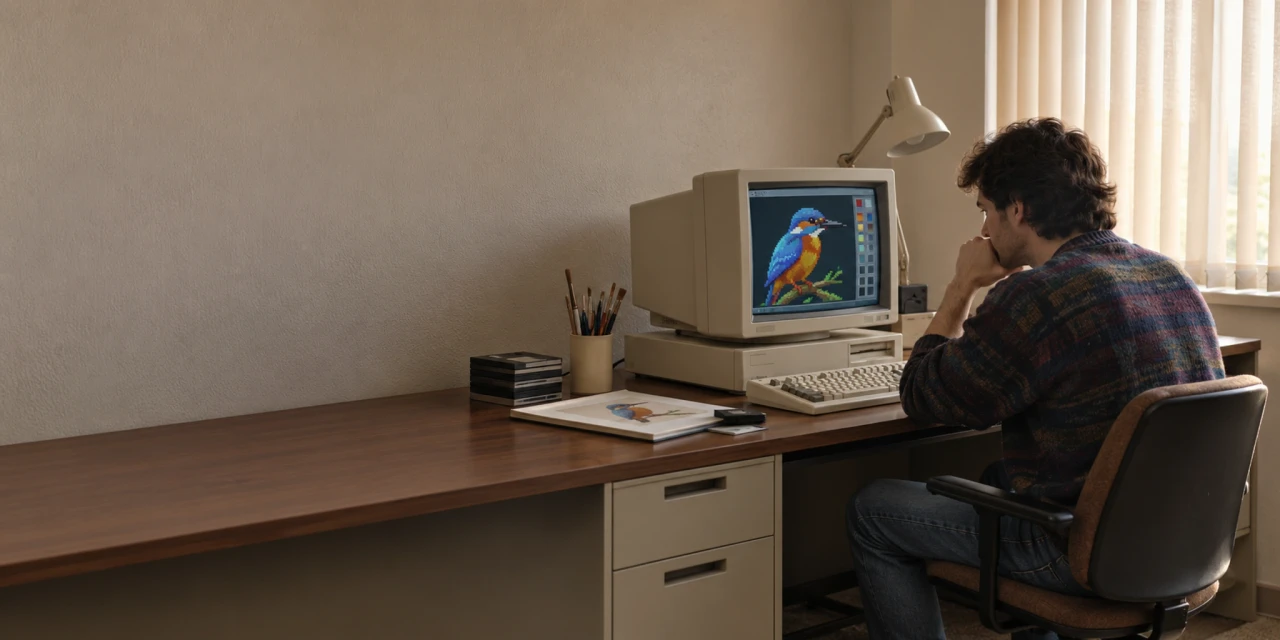
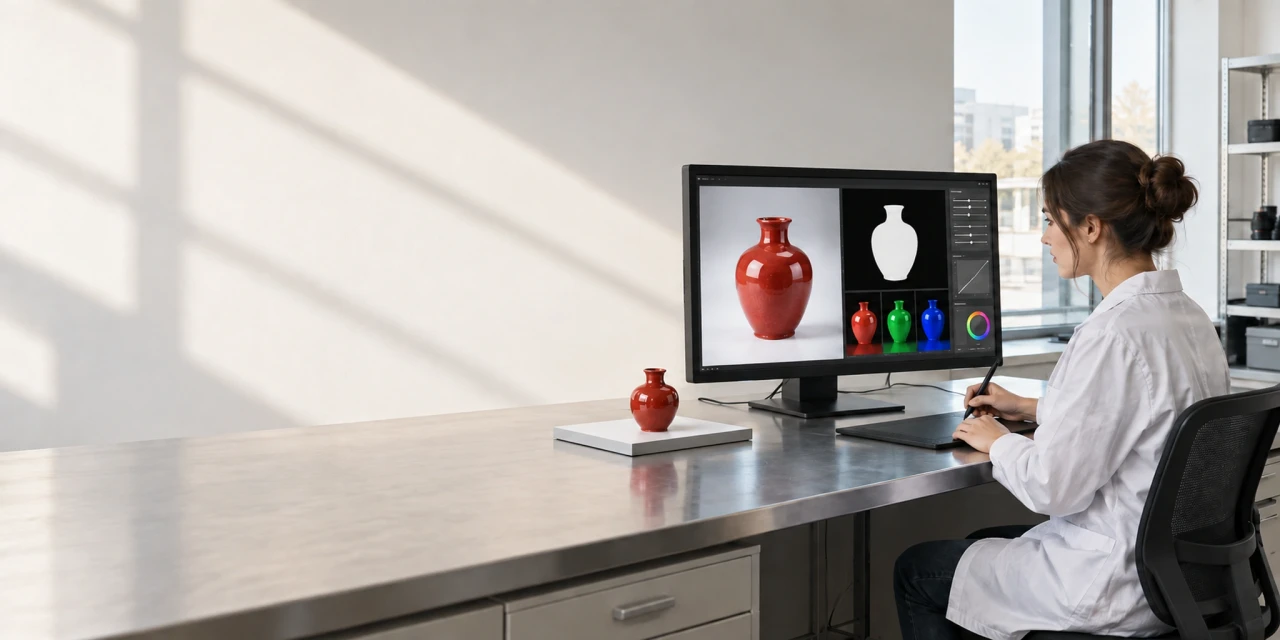
The target can store an alpha channel, but converting an opaque image does not create transparent areas. Removing a background is a separate editing step.
Lossless sample storage
Netpbm stores these samples without compression. Reducing colour, thresholding or changing maxval can still lose information before storage; text and binary representations change the layout, not its image meaning. PAM can store its supported image samples without lossy compression. This applies after rendering and sample conversion: it does not guarantee preservation of source precision, colour space or document structure, and cannot undo earlier losses.
PCX
Source
PCX
ZSoft PC Paintbrush
Compression: LosslessTransparency: NoMetadata: Resolution, Palette information
A legacy Paintbrush raster format with planar colour storage and run-length compression.
PAM fits your delivery use: Channel-aware image pipelines.
You need lossless storage of the rendered samples supported by PAM.
You can validate the destination’s sample precision and colour interpretation.
You need a PAM-compatible workflow that can hold transparency added in a separate edit.
Probably not when
You expect lossless encoding to restore lost details or editing structure.
You require identical samples without a defined colour and precision policy.
You expect automatic background removal or transparency.
PCX to PAM conversion details
Transparency
The target can store an alpha channel, but converting an opaque image does not create transparent areas. Removing a background is a separate editing step.
Lossless sample storage
Netpbm stores these samples without compression. Reducing colour, thresholding or changing maxval can still lose information before storage; text and binary representations change the layout, not its image meaning. PAM can store its supported image samples without lossy compression. This applies after rendering and sample conversion: it does not guarantee preservation of source precision, colour space or document structure, and cannot undo earlier losses.
Sample precision & colour
Rendered SDR output uses 8-bit display pixels; source precision and original ICC profiles are not retained. Colour handling depends on the decoder and supported source variant.
Metadata & colour
This output writer does not preserve source EXIF, GPS or XMP metadata blocks. Original ICC profiles are not copied. Rendered SDR output uses 8-bit display pixels; source precision and original ICC profiles are not retained. Colour handling depends on the decoder and supported source variant.
Compression
PCX: Lossless → PAM: Uncompressed PCX: PCX RLE is lossless for stored samples. Palette reduction is a separate potentially lossy step; colour planes are channels, not editable composition layers. PAM: Netpbm stores these samples without compression. Reducing colour, thresholding or changing maxval can still lose information before storage; text and binary representations change the layout, not its image meaning.
Transparency
PCX: No → PAM: Yes
Colour depth
PCX: Palette or 24-bit RGB → PAM: maxval up to 65535
Dimensions
Conversion keeps the decoded image dimensions unless you edit or resize it. Orientation is applied by supported decoders. ICO fits the image into one selected square size; PDF page layout and rendering DPI are configurable. Device, memory and codec limits still apply.
Metadata
This output writer does not preserve source EXIF, GPS or XMP metadata blocks. Original ICC profiles are not copied.
Common questions
Will the background become transparent?+
The target can store an alpha channel, but converting an opaque image does not create transparent areas. Removing a background is a separate editing step.
Does lossless output mean an unchanged source?+
Netpbm stores these samples without compression. Reducing colour, thresholding or changing maxval can still lose information before storage; text and binary representations change the layout, not its image meaning. PAM can store its supported image samples without lossy compression. This applies after rendering and sample conversion: it does not guarantee preservation of source precision, colour space or document structure, and cannot undo earlier losses.
Are bit depth and colour values guaranteed to match?+
Rendered SDR output uses 8-bit display pixels; source precision and original ICC profiles are not retained. Colour handling depends on the decoder and supported source variant.
Will metadata and colour profiles be retained?+
This output writer does not preserve source EXIF, GPS or XMP metadata blocks. Original ICC profiles are not copied. Rendered SDR output uses 8-bit display pixels; source precision and original ICC profiles are not retained. Colour handling depends on the decoder and supported source variant.